






Get Started
Building the foundation for succession planning
Why succession planning matters
Many organizations recognize the importance of succession planning but lack a clear starting point.
RHR helps leaders understand their current succession maturity, leadership priorities, and talent processes—creating a practical foundation for building a sustainable leadership pipeline.

Establishing the foundation for succession planning
Effective succession planning starts with a clear understanding of leadership priorities, pipeline strength, and organizational readiness.
RHR helps organizations establish the structure, processes, and alignment needed to build leadership continuity over time.

Understand the current state
Review governance structures, leadership processes, and available talent data.
Identify leadership priorities
Clarify the leadership roles and risks most critical to the organization.
Assess succession maturity
Evaluate how current talent practices support leadership continuity.
Define the framework and processes
Establish a practical approach for building the leadership pipeline.
Align leadership teams
Ensure leaders understand their role in supporting succession planning.
Why work with us
RHR approaches succession planning as a leadership discipline rather than a checklist.
Our consultants combine behavioral science expertise with decades of advisory experience to help organizations build succession processes that reflect real leadership decisions and governance structures.

Key articles and insights
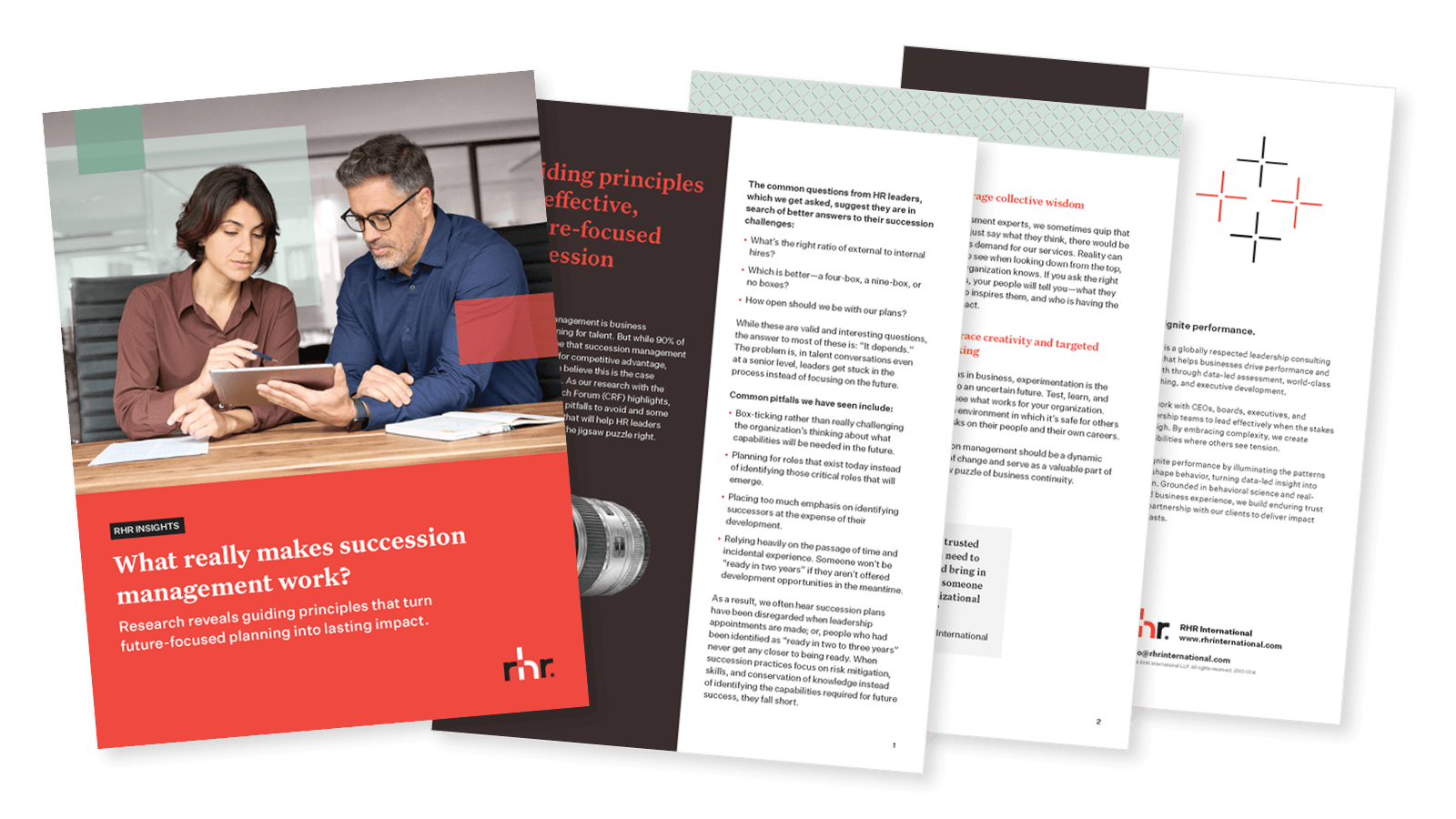
What really makes succession management work?
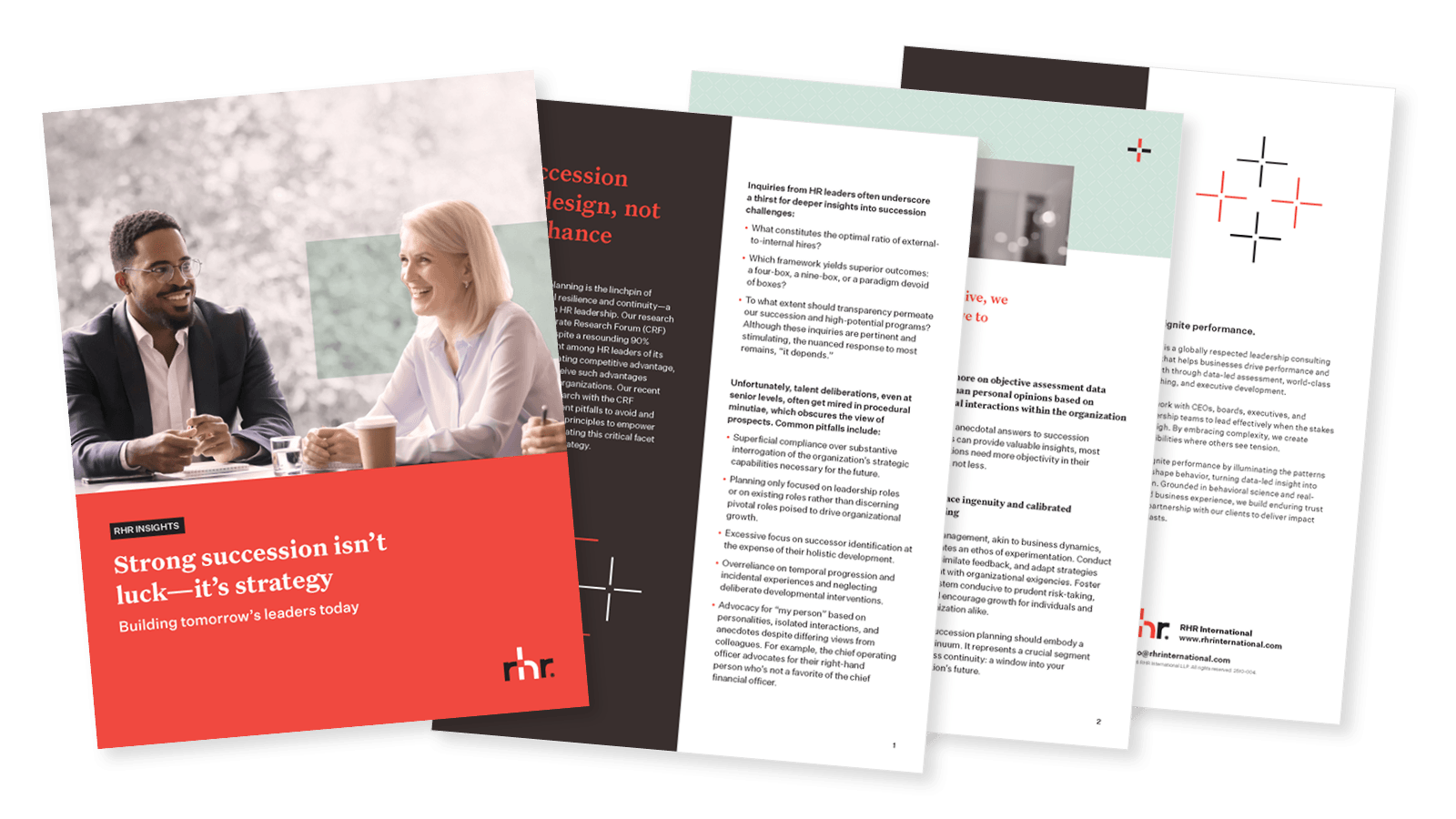
Strong succession isn’t luck—it’s strategy
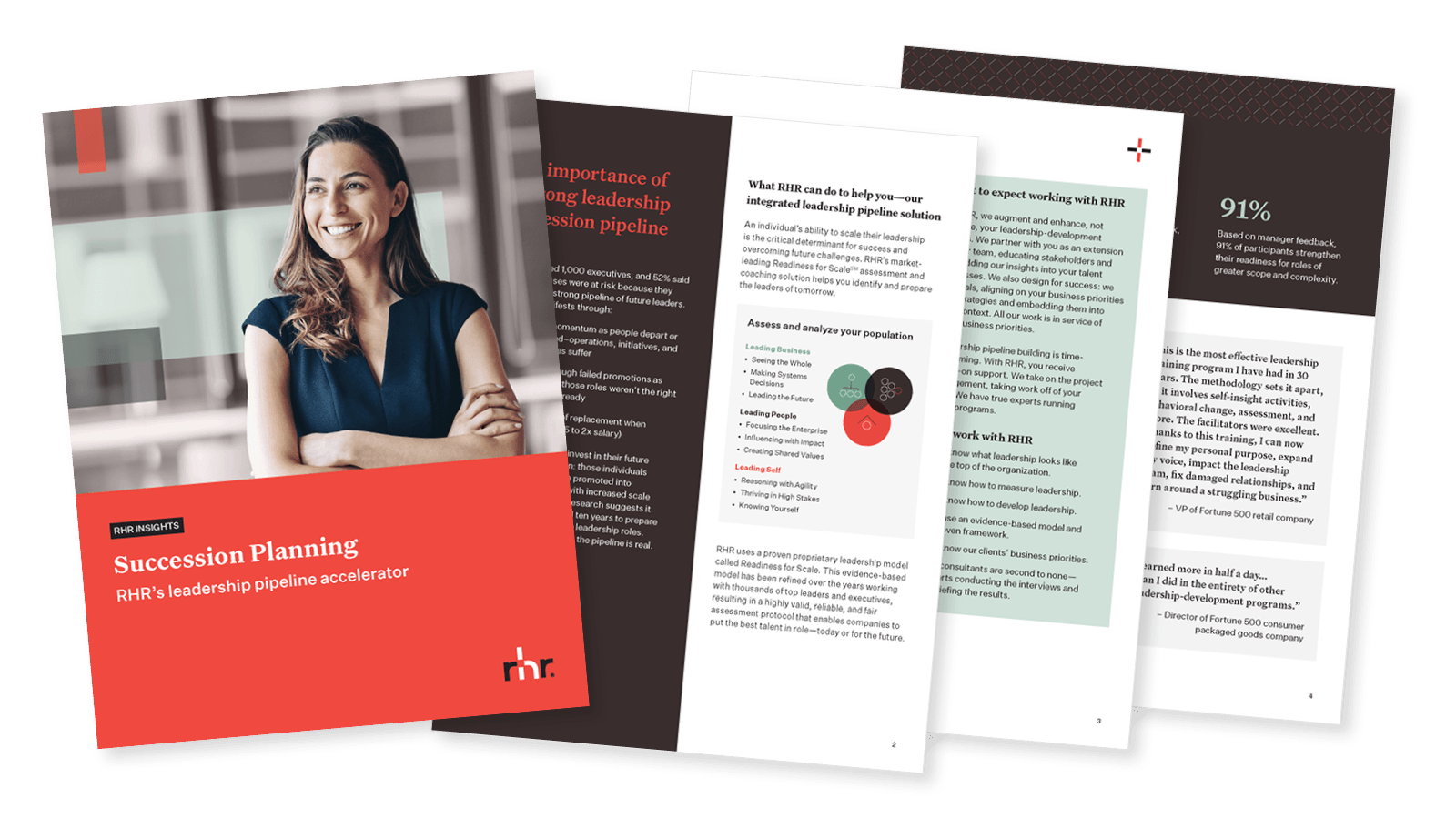
Succession Planning: RHR's leadership pipeline accelerator




Leadership transitions reshape teams