







Role Profiles
Define the leadership roles that shape the future
Why role profiles matter
Effective succession planning begins with clarity about which roles matter most.
RHR helps organizations define critical leadership roles and capabilities leaders will need to succeed as the organization evolves—and ensure those definitions remain relevant as strategy and market demands change.

Clarifying the roles that matter most
RHR helps organizations identify and define the leadership roles that will have the greatest impact on future business success. As organizations grow, transform, and face increasing complexity, leadership expectations evolve quickly. Critical roles often require new capabilities, broader enterprise perspective, and different leadership behaviors than they did in the past.
We work closely with leadership teams to clarify which positions are most essential to long-term strategy, define the experiences and capabilities required for success, and build leadership profiles that support stronger succession, selection, and development decisions. By aligning leadership expectations across the organization, RHR helps clients create greater clarity, consistency, and confidence in how future leaders are identified, developed, and prepared to lead.
Identify critical roles
Determine which leadership positions are most essential to the organization’s future strategy.
Define capabilities
Clarify the experiences, leadership capabilities, and approach required for success.
Develop success profiles
Create leadership profiles that guide succession planning and evolve as leadership demands change.
Align leadership teams
Build shared understanding of leadership expectations across the organization.
Guide talent decisions
Use role profiles to evaluate readiness and guide leadership development.
Why work with us
RHR connects leadership profiles directly to strategy and leadership context, ensuring role definitions reflect real and evolving leadership challenges rather than static or generic competency models.

Key articles and insights
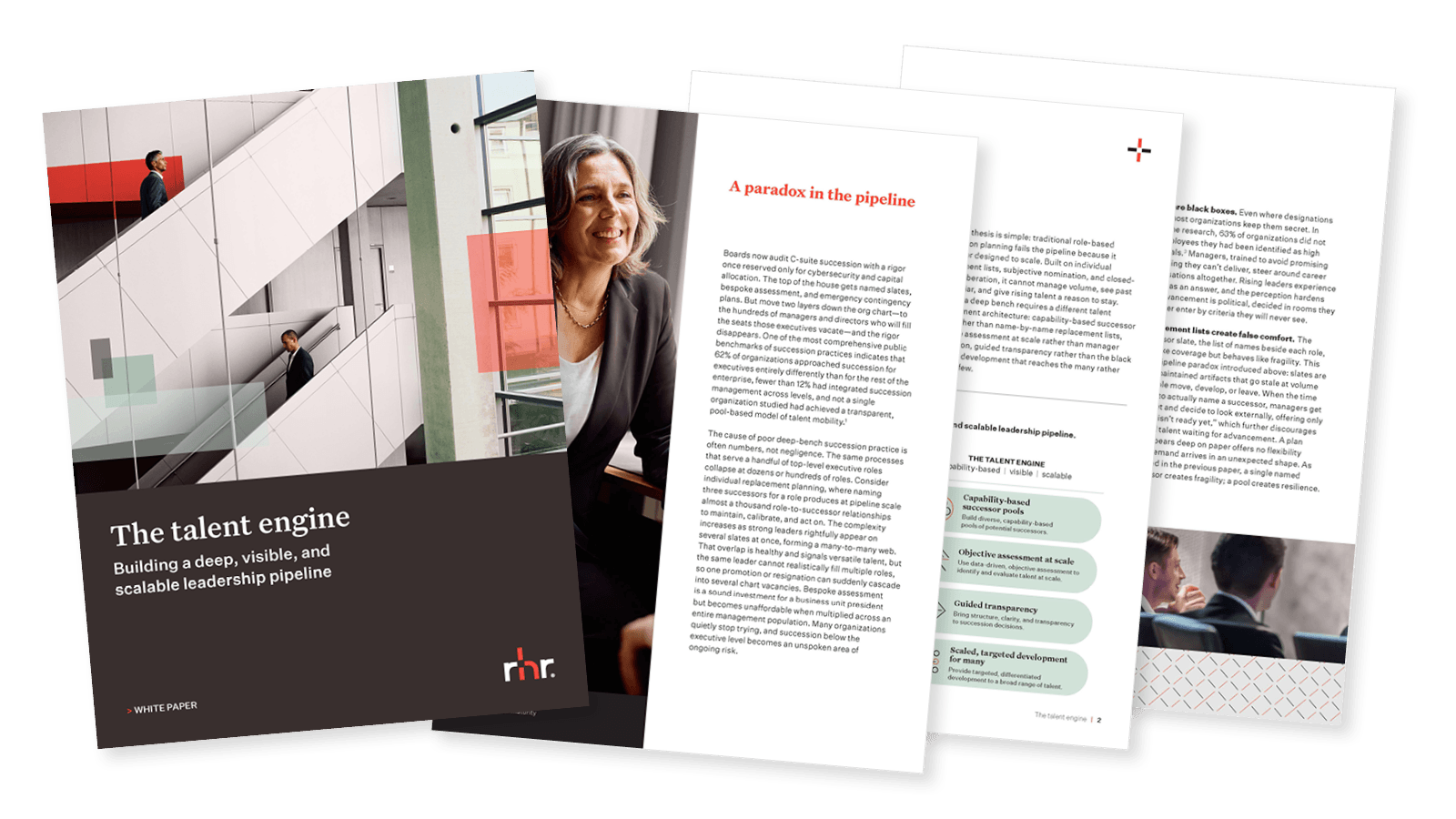
The talent engine: Building a deep, visible, and scalable leadership pipeline
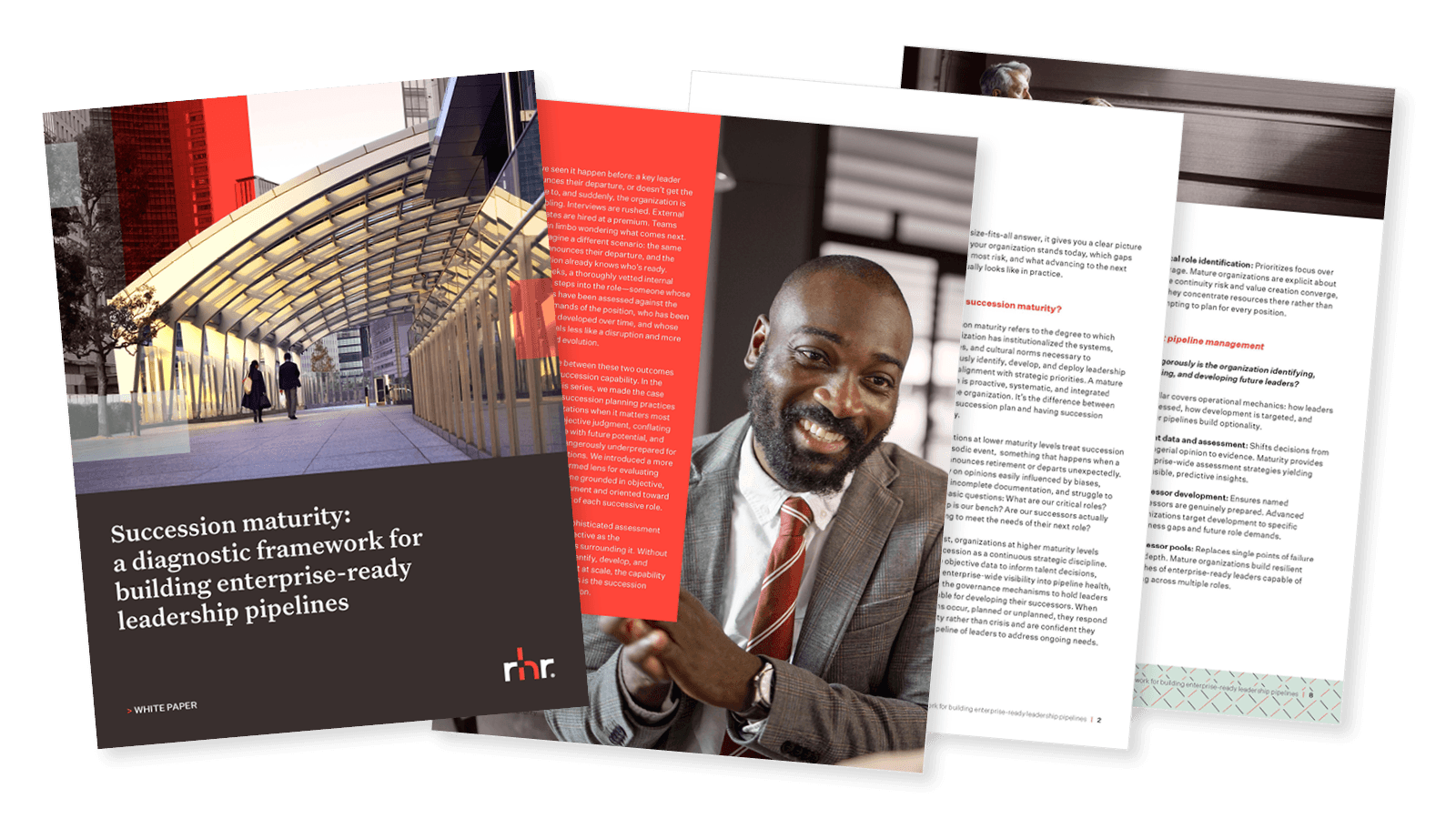
A diagnostic framework for building enterprise-ready leadership pipelines
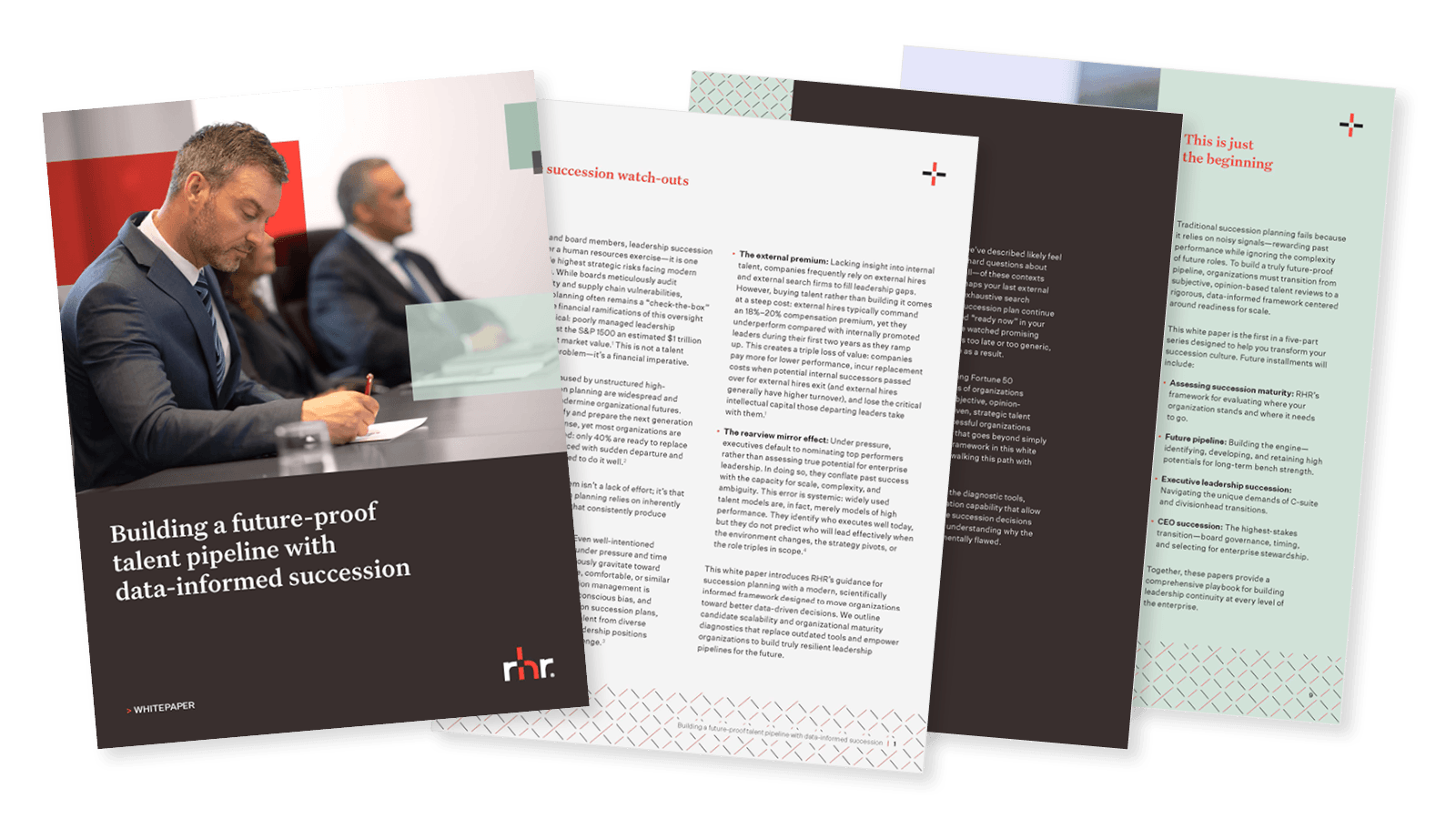
Building a future-proof talent pipeline with data-informed succession




Clear expectations strengthen hiring